BY MIRHAN ABOUELFADL, PUBLISHED MAY, 2022
GLAM
Galleries, Libraries, Archives and Museums

Cultural heritage and knowledge transfer are concerned with the way in which the story is told, and information is shared. Today, we are witnessing a revolutionary shift from cultural heritage object recording and collection creation to digital heritage. This transformation, enabled by technological developments, has become a key process in the reliability of cultural property at any time and in any place, whether the property includes tangible or intangible artefacts.
The preservation, I believe, is the key play here. In this case, the cultural property could be tangible objects, and we can see the digitisation process through scanning, photography, and other related operations enabled by numerous. Cultural property may also include intangible artefacts which in their turn are being processed to digital settings.
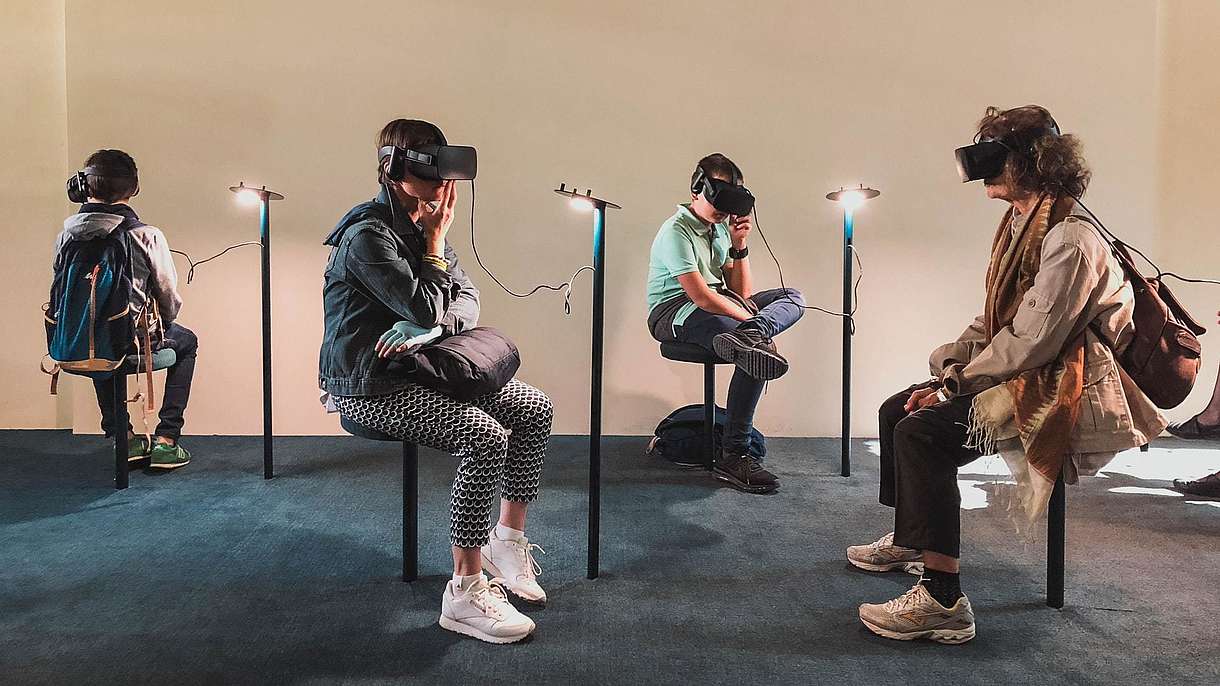
The conventional display at museums, as knowledge-transfer organisations, as well as in archaeological sites and comparable display areas, is undergoing massive transformation, and it is time to embrace the opportunity and deploy diverse digital transformation taxonomies and tools in exploring cultural heritage and put those advancements into providing a more reliable and engaging experience inside museums and other cultural showcases.
Key Concepts
Many people confuse or use the terms digitisation and digitalisation interchangeably. True, both are driving digital transformation, but they are not the same thing.
The term “digitisation” refers to the creation of a digital surrogate of a physical object, which is then used to improve the experience. Leveraging the digital object in improving the process is digitalisation. The outcomes of these are referred to as digital transformation.
Digital techniques for Documenting and Preserving Cultural Heritage
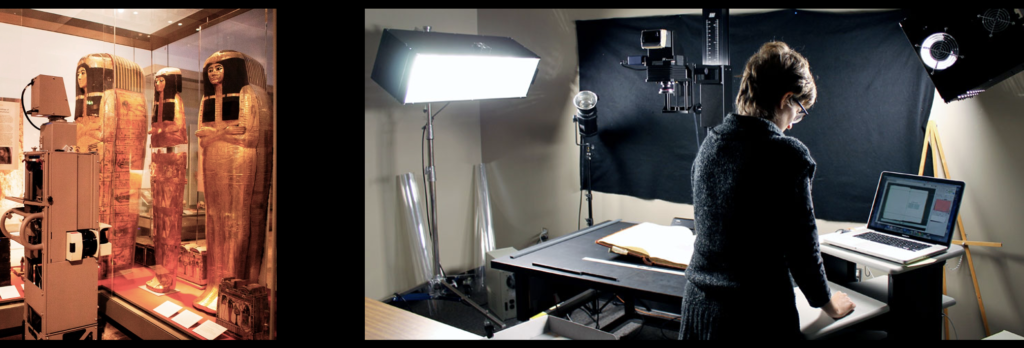
A diverse range of interdisciplinary methodologies which employed best practices for a group of cultural heritage artefacts being documented, evaluated, and visualized, for the purpose of conserving material cultural history, are published in the one-of-a-kind collection ‘’Digital Techniques for Documenting and Preserving Cultural Heritage’’. This significant collection includes monographs as well as edited topic collections in the broad fields of cultural heritage, digital humanities, collecting and collections, public history, and related applied humanities.
During a group study, (Aseel, Marwan and me) picked one of the case studies (LIBS) by “Vincent Detalle” to investigate and study more about the process and the technology implementation; LIBS (Laser Induced Breakdown Spectroscopy).
Understanding LIBS
Laser Induced Breakdown Spectroscopy study by “Vincent Detalle”
LIBS is an analysis of any type of matter where a type of atomic emission spectroscopy uses high-energy laser pulses. It is intended to allow for the safe characterization of the material upon which the sample is held. The laser atomizes, excites, and ionises the material, causing plasma to form.
LIBS in Culture Heritage
Primarily used in industry but can be successfully used in cultural heritage characterization. This study focused on two main functions: Identification of the material and the diagnosis for conservation and restoration. Some of its benefits include the usage of a small, handheld device, which could be taken over to the study site also, it doesn’t require the material to be taken to the device. Furthermore, one of the major benefits of this method is that it is a minimally destructive/intrusive method which does not require the removal nor preparation of the sample, thus, it does not affect the structural integrity of the rest of the artefact as it does not heat the rest of the material. One of the features of the technique is its ability to penetrate the material and determine the stratigraphy.
I think, LIBS, as an analytical technique, will provide an edge in the future of cultural heritage research (rather than classical techniques), particularly because of its ability to be combined with other laser techniques like Raman spectroscopy and laser fluorescence.
References
Bentkowska-Kafel, Anna, and Lindsay MacDonald. n.d. “Digital Techniques for Documenting and Preserving Cultural Heritage.” DIGITAL TECHNIQUES, 372.
Hennessy, Kate. 2012. “Cultural Heritage on the Web: Applied Digital Visual Anthropology and Local Cultural Property Rights Discourse.” International Journal of Cultural Property 19 (3): 345–69. https://doi.org/10.1017/S0940739112000288.
Conceptual Introduction to Digital Arts & Humanities, Department of Digital Humanities, University College Cork
