BY MIRHAN ABOUELFADL, PUBLISHED MAY 25, 2022
THE POSTHUMAN CYBORG
Posthumanism & Transhumanism

The concept of “posthumanism” appeared in 1999, when German philosopher Peter Sloterdijk studied the relationship between man and modern technology and its future, which will change human structure, habits, and nature. In the same context, he used the term “transhumanism” as a preparatory stage for transhumanism.
Transhumanism is based on an evolutionary movement that seeks to develop human intellectual and physical capabilities to keep pace with advanced technological development. In the sense of using science and technology to “digital enhancement” of the human being, that is, employing technology to overcome ageing, suffering, disease, and perhaps even stupidity. So that humans are more able to keep up with the rapidly evolving digital enhancement.
In the past, humans had artificial limbs, glasses, or artificial lenses and people now are expecting a new wave of technological modifications, for example, contact lenses that take pictures or video clips, or small-sized robots that can control the blood flow in our bodies, and perhaps implanting electronic chips inside the brain that will speed up the human thinking process, and make our brains directly connected. online.
On the contrary, in 2004, Stanford political scientist Yoshihiro Francis Fukuyama called transhumanism “the world’s most dangerous idea” in the print edition of Foreign Policy. His argument directly attacks transhumanism’s ingrained optimism as overconfident: we could make things worse by accident, even when we intend to make them better.
I think that it is somehow true, but I’m afraid that when we are trying to improve something, we lose another thing instead. Humans have cultivated roses for centuries. Over that time, some types of roses lost their distinctive scent. As many gardeners focused only on improving the flowers’ beauty and didn’t realize the scent could be faded until it was gone. We might create humans with less capacity to feel anger or emotional pain, but how can we reassure them that we will also reduce their ability to love?
Cyborgs
The cyborg is a hybrid ‘assemblage’ that avoids the unified singular character of the ‘human’ (The Cyborg Manifesto, Donna Haraway)
Cyborg bodies were presented from a posthumanism perspective in Black Mirror, a British anthology TV series that explores near-future dystopias using science fiction technology.
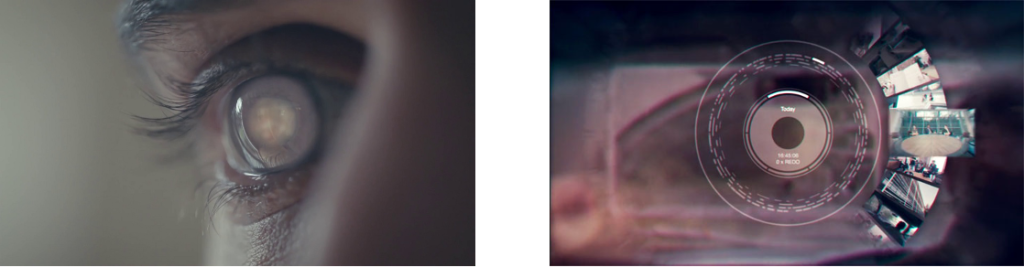
Although Black Mirror is a standalone episode-based show, each story makes the viewer questions humanity from a posthumanism perspective, which is followed by a subsequent consideration of the technology consequences on humans. The idea might be scary, but imagine how close it is to becoming a reality!
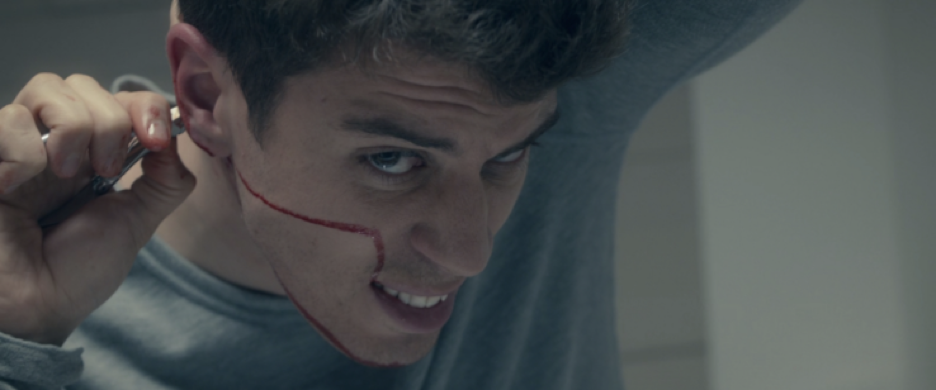
People in the episode “The Entire History of You” had cyborg bodies. It was, in my opinion, a relatable and accurate depiction of what transhumanists discuss. People (cyborgs) were able to record and replay their memories using advanced technologies ‘grains’ implanted in their brains. But, in this case, what was their sense of self, which is directly related to our memories?
This episode, I believe, could be classified as posthumanist because it raised threats and concerns about the logical and convincing future depiction of cyborgs’ shapes.
References
The Cyborg Manifesto – Donna Haraway
‘’Transhumanism, Posthumanism, And The “Cyborg Identity”
Fe Dergi 13, no. 1 (2021), 177-187.
URL: http://cins.ankara.edu.tr/25_14.pdf
Black Mirror – The Entire History of You
